From manual tracking to system-wide visibility
Led the end-to-end design of a 0→1 internal tool, defining structure, states and user-facing logic for a system that was still being built
MY ROLE
Product Designer
TIMELINE
Sept 2025 – Dec 2025
TEAM
1 PM, 2 Engineers, QA
IMPACT
Cross-team visibility into file deletion workflows
Context
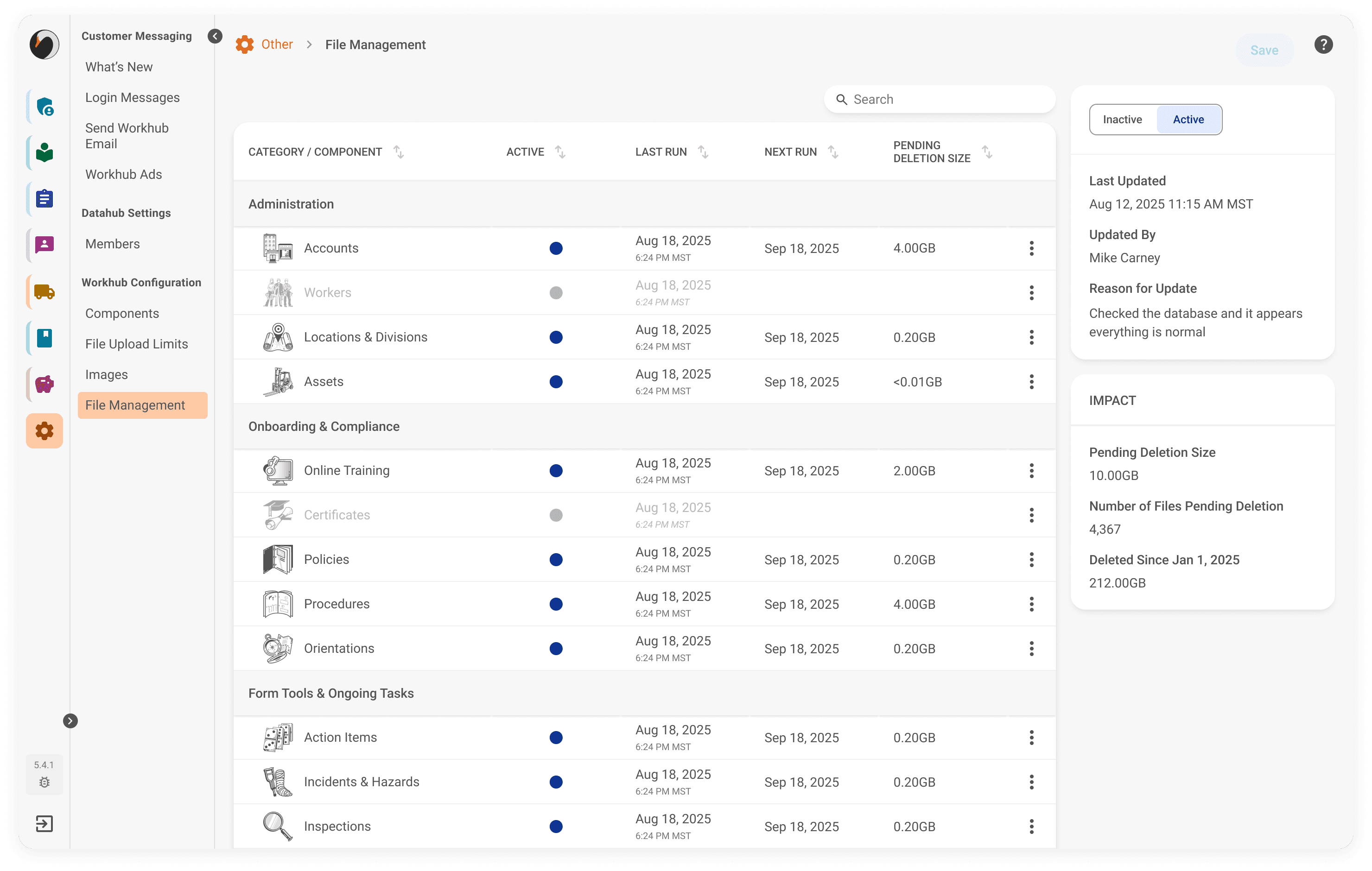
Workhub’s servers were filling up with outdated data, increasing storage costs and introducing risk. Automated file deletion processes were being developed to address this, but they were only accessible through code.
Incorrect deletions could result in data loss or compliance issues, making it critical that teams can validate what was happening and intervene when needed.
Problem
With file deletion processes only accessible through code, stakeholders (PM, CTO, DevOps) lacked a shared view of what was being deleted, making it difficult to validate accuracy, understand file states, or intervene without risk.
Approach
I worked closely with the CTO and PM to understand how file deletion processes were being defined, what data was available and what decisions needed to be made.
Since the system was still evolving, I had to:
Understand how files were being targeted and why
Map backend database structure to a usable interface
Define what information was essential for validating and controlling the system
What initially started as a request to “show logs” evolved into designing a tool that supports decision-making, validation and accountability across teams.
Key design decisions
Designing for validation, not just visibility
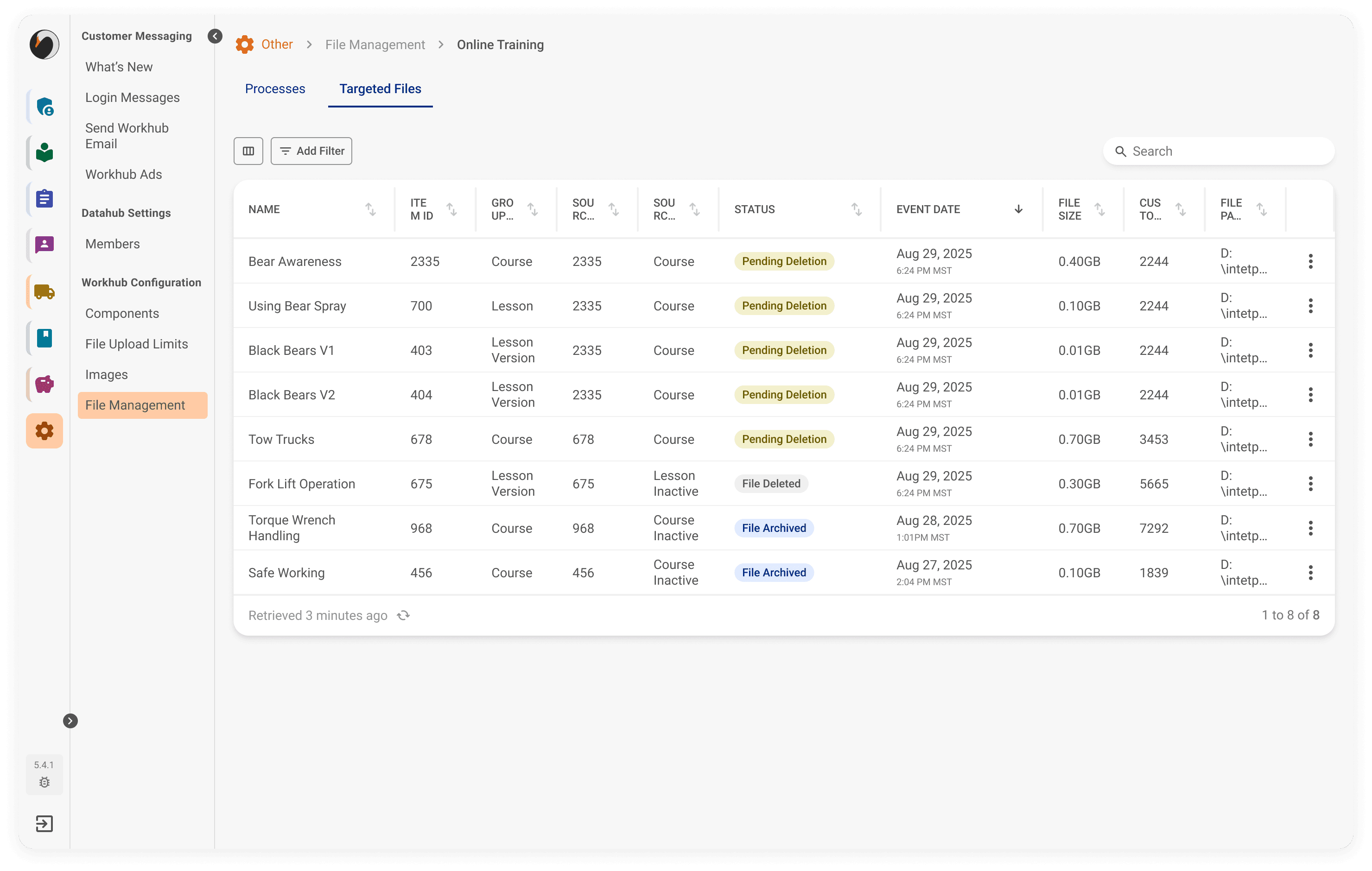
Focused on helping users confirm whether the system was targeting the correct files, not just observing activity
Translating backend processes into clear states
Simplified complex logic into human-readable statuses to support quick understanding across technical and non-technical usersBalancing simplicity with depth
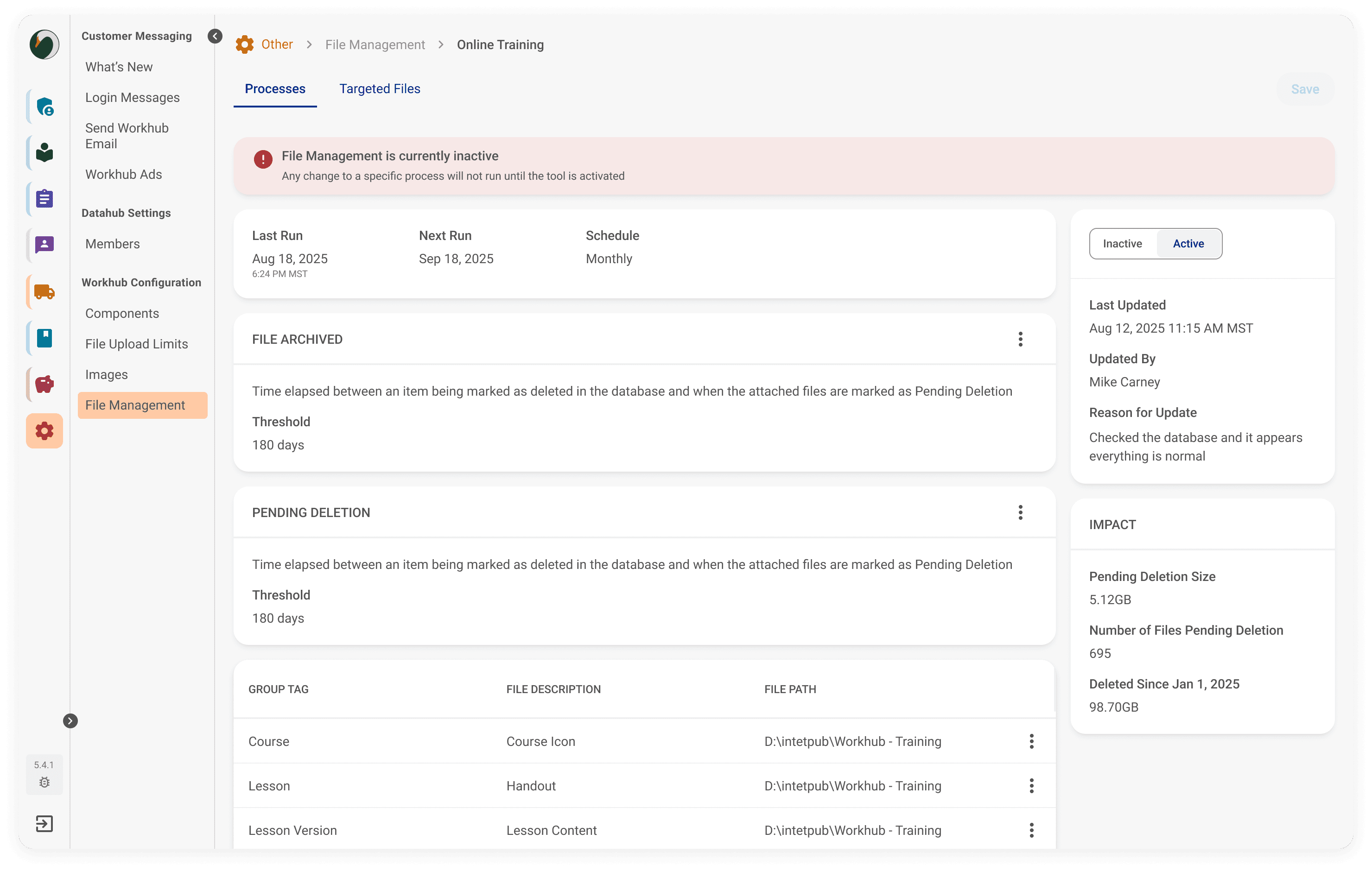
Reduced cognitive overload by default while allowing access to detailed logs when neededBuilding in accountability
Required reasons and user tracking for changes to ensure transparency and shared understanding across teams
Trade-offs
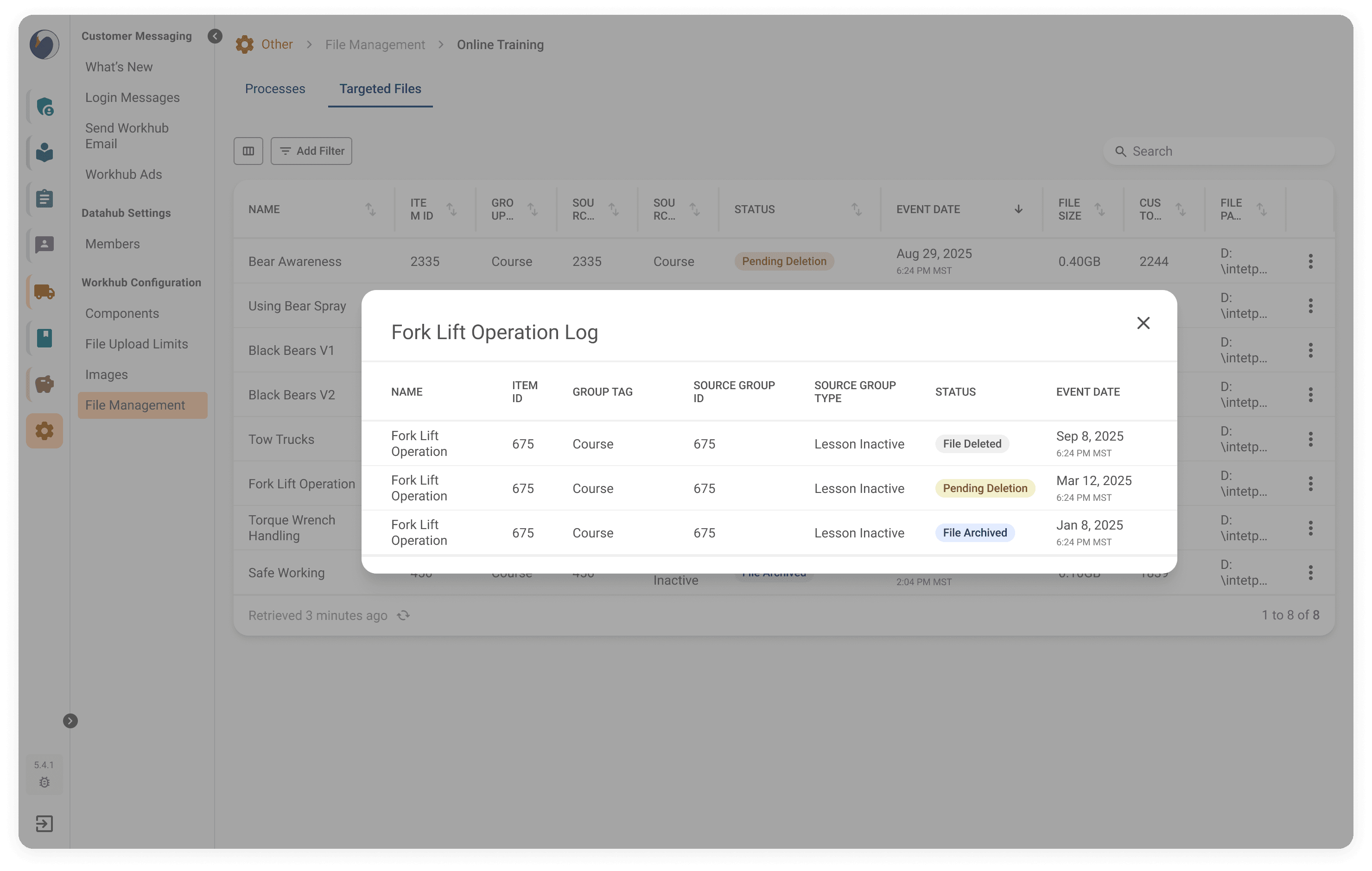
Simplified system states
I reduced multiple backend conditions into three clear statuses to make things easier to understand, even though it meant not showing every technical detailDesigned with incomplete information
I moved forward while the backend processes were still being defined, making informed assumptions and leaving room for the design to evolve
Impact
Created a shared view of file deletion processes across PM, CTO, and DevOps, improving alignment and understanding
Gave the PM autonomy to validate and manage processes without relying on developers
Reduced risk by enabling teams to confirm what was being targeted and safely pause processes when needed
Replaced manual investigation with a centralized system, improving efficiency and confidence
Surfaced the impact of automated deletion processes, which saved 91.26 GB of storage in the first few months
Key takeaway
This project pushed me to think beyond UI and focus on how to make complex, evolving systems understandable and actionable. Designing for a backend process that wasn’t fully defined required me to make informed assumptions and define structure where it didn’t yet exist. It reinforced the importance of creating shared understanding across teams and designing for trust in high-risk actions, so users can confidently validate and control what’s happening.